Top 3 Places to Visit in Morocco (And Why These 3, Specifically)
Table of Contents
Top 3 Places to Visit in Morocco (And Why These 3, Specifically)
Quick answer: The top 3 places to visit in Morocco are Marrakech, the Sahara Desert around Merzouga, and Chefchaouen. Together they cover the three experiences that define a Moroccan trip — Marrakech’s Imperial City culture and souks, Merzouga’s Sahara dunes and desert camps, and Chefchaouen’s blue-washed mountain streets — and no other three-stop combination covers as much ground with as little overlap.
Nav: Marrakech · Sahara Desert (Merzouga) · Chefchaouen · Why Not Fes or Essaouira? · How to See All 3 · FAQ
Ask ten travel bloggers for the top 3 places to visit in Morocco and you’ll get ten different lists, usually because most of them are really just trimming a 10-or-15-item “best places” list down to a headline number. This guide does the opposite. We started from the question travelers actually ask before a first trip — “if I only have time for three stops, which three actually matter?” — and built the answer around what each place uniquely contributes, not just how pretty it photographs. If you want the fuller, exhaustive version of Morocco’s destinations, our Top 10 Must-See Destinations in Morocco guide covers the rest of the country in depth; this page is deliberately narrower.
At a Glance: The Top 3 Places to Visit in Morocco, Ranked
| Rank | Destination | Signature Experience | Minimum Days | Region |
|---|---|---|---|---|
| 1 | Marrakech | Medina souks, Jemaa el-Fna, palaces & gardens | 2–3 | Central Morocco |
| 2 | Sahara Desert (Merzouga) | Camel trek & overnight in Erg Chebbi dunes | 2 (1 night desert) | Southeast Morocco |
| 3 | Chefchaouen | Blue-painted medina in the Rif Mountains | 1–2 | Northern Morocco |
Each of these earns its place for a different reason, covered in detail below, and each links to a deeper guide if you want to go further than this overview.
Our Methodology: How We Picked These 3
As a tour operator based in Merzouga running these exact routes year-round, we weighed four factors rather than just personal favorites: (1) how distinct the experience is from anything else in Morocco, so the three picks don’t overlap; (2) accessibility for American travelers specifically, since flight routes and driving distances matter more to a one-or-two-week trip than they do to a backpacker with months to spare; (3) how consistently each destination shows up as a trip highlight in traveler feedback, not just in marketing photos; and (4) whether the destination works as a standalone stop or requires an unreasonable detour. Marrakech, Merzouga, and Chefchaouen were the only three that scored well across all four criteria simultaneously — which is also exactly why the “why not” section below exists, since several strong destinations were excluded on one criterion despite excelling on the others.
#1: Marrakech — Morocco’s Cultural Anchor
Marrakech is the single most-visited city in Morocco, and it earns the #1 spot on this list because it’s the only destination that functions as both a standalone trip and the natural gateway to the other two. Nearly every desert tour and most northern-Morocco routes start or end here, and its international airport (RAK) has more direct connections to Europe and North America than any other Moroccan city besides Casablanca.
How Many Days Do You Need in Marrakech?
Two full days is the practical minimum: one for the medina, Jemaa el-Fna square, and the souks, and one for the palaces, gardens (Majorelle Garden, Bahia Palace), and a hammam or cooking class. Three days lets you add a half-day trip to the Ourika Valley or Atlas Mountains foothills without feeling rushed. We cover this question in far more depth, including a day-by-day breakdown, in Is Marrakech Worth Visiting? An Honest 2026 Guide to the Red City.
What Makes Marrakech One of the Best Places to Visit in Morocco
It’s the density of distinct experiences packed into one walkable medina: a 900-year-old mosque (the Koutoubia), one of the largest traditional souks in North Africa, a main square that functions as an open-air theater every night, and Art Deco and Art Nouveau architecture from the French Protectorate era a few blocks away. No other Moroccan city compresses this much contrast into a single afternoon’s walk.
Best Time to Visit Marrakech
March–May and September–November bring warm, dry days in the mid-70s to mid-80s°F, ideal for walking the medina. Summer (June–August) regularly pushes past 100°F (38°C), which turns midday sightseeing into an exercise in finding shade between riad courtyards. Winter (December–February) is mild by day but cool at night, and it’s the best-value season for riad rates.
Where to Stay: Riad vs. Hotel
A traditional riad — a courtyard house converted into a small guesthouse, usually 6–15 rooms around a central pool or garden — is the defining Marrakech accommodation, and staying in one inside the medina walls is arguably as much a part of the Marrakech experience as visiting any single monument. Riads in the medina put you within walking distance of Jemaa el-Fna but require navigating narrow, unmarked alleyways (most riads will arrange a porter to meet you at the nearest accessible point). Modern hotels in Gueliz, the newer part of the city, trade that atmosphere for easier access, pools, and more predictable amenities — a reasonable choice for a first night after a long flight. Our full comparison is in Where to Stay in Morocco: Riad vs Hotel & the Best Areas, City by City.
Day Trips from Marrakech Worth Adding
If you have a spare half-day beyond the two-day minimum, the Ourika Valley and Atlas Mountain foothills (about an hour away) offer waterfalls and Berber villages, while the Agafay Desert (45 minutes away) delivers a rocky, moon-like landscape and sunset camel rides for travelers who won’t make it to the true Sahara. Both are well-suited to travelers with limited time who still want a taste of Morocco’s landscape beyond the city.
#2: The Sahara Desert (Merzouga) — The Experience You Can’t Get Anywhere Else

If Marrakech makes the list because of density, Merzouga makes it because of uniqueness: nowhere else in Morocco, or realistically within an 8-hour flight of the United States, can you camel-trek into 150-meter-tall sand dunes and sleep in a Berber camp under an unpolluted desert sky. It’s consistently the single most-mentioned highlight in traveler reviews of Morocco trips, ahead of any city.
Why Erg Chebbi Specifically
Merzouga sits at the edge of Erg Chebbi, Morocco’s tallest and most accessible dune field. Unlike Erg Chigaga further south and west, Erg Chebbi has a paved road running almost to its base, which is why the overwhelming majority of Sahara desert tours from Marrakech and Fes route here rather than to the more remote dune fields. Accessibility hasn’t made it any less dramatic — dunes here reach roughly 150 meters, among the tallest in Morocco.
What a Merzouga Visit Actually Involves
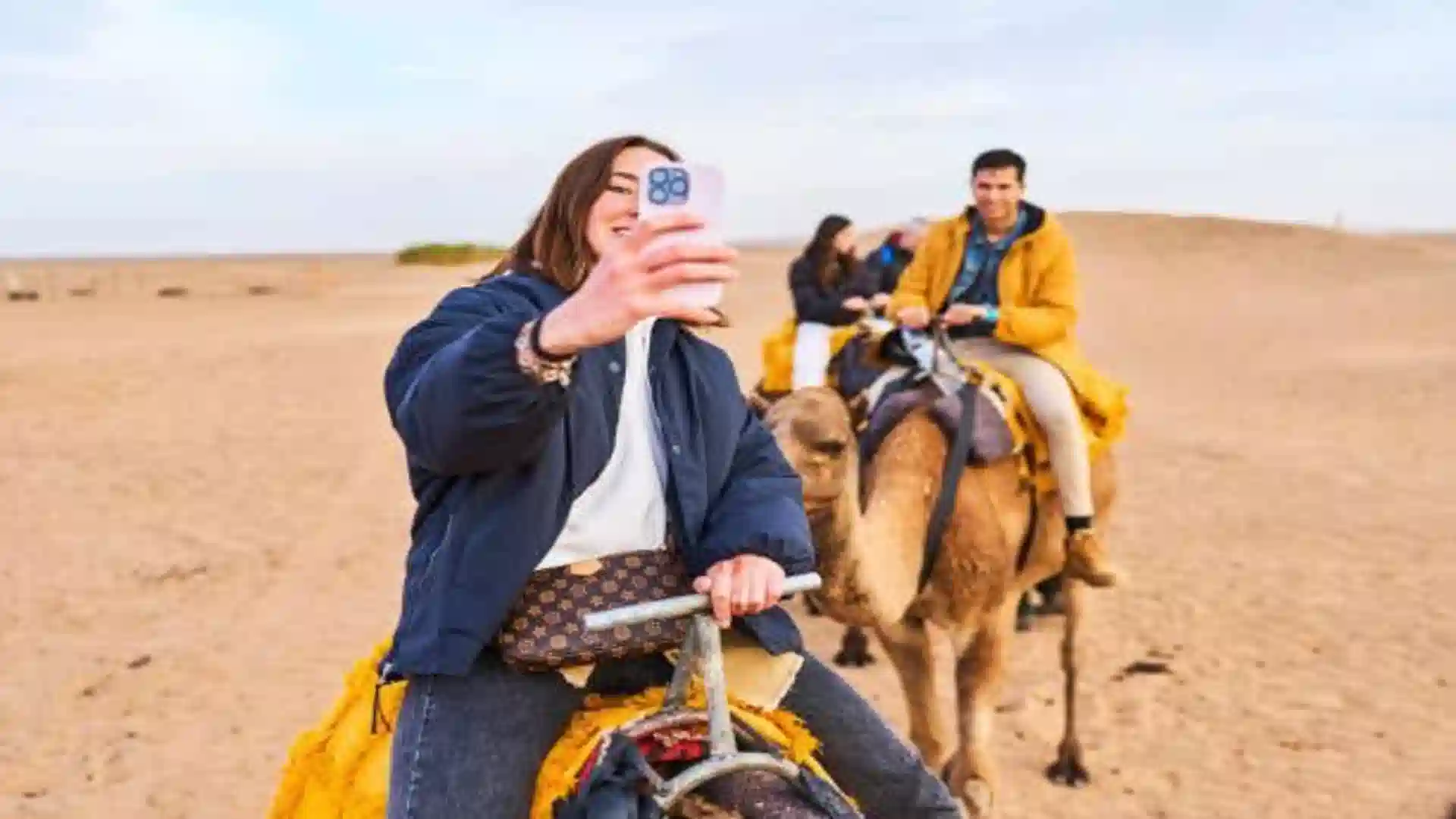
Most itineraries build in one overnight: arrive at Merzouga by late afternoon, camel trek roughly 45–60 minutes into the dunes as the sun sets, spend the night at a Berber camp with a communal dinner, then wake before dawn to watch the sunrise before riding back out. One night is the standard and satisfying option; a second night mainly adds a quieter, less touristed evening rather than materially different scenery.
For the full range of camp tiers, prices, and how to book this specific leg, see Merzouga Morocco: The Complete 2026 Desert Guide and Camel Trekking in Merzouga: Everything You Need to Know.
Standard vs. Luxury Desert Camps
Standard Berber camps offer shared or twin tents and shared bathroom facilities a short walk away — simple, authentic, and the norm on shared group tours. Luxury camps offer private en-suite tents with real beds and private bathrooms, usually at double to triple the price, and are the better choice for honeymooners or travelers prioritizing comfort over authenticity. Either way, expect the temperature to drop sharply after dark, even in warmer months — bring more layers than you think you’ll need.
Beyond the Camel Trek
Camel trekking gets top billing, but most desert camps also offer sandboarding down the dunes, quad biking across the flatter desert terrain outside the core dune field, and — thanks to minimal light pollution — some of the best stargazing in the country. Clear desert nights routinely reveal the Milky Way with the naked eye, a genuine rarity for most American travelers.
Getting to Merzouga
There’s no major airport directly in Merzouga; the nearest is Errachidia (ERH), roughly 2 hours away with limited domestic connections, which is why the overwhelming majority of visitors arrive by road as part of a multi-day tour from Marrakech, Fes, or Casablanca rather than flying in directly.
#3: Chefchaouen — Morocco’s Most Photogenic Surprise
Chefchaouen takes the third spot over strong competition (Essaouira and Fes both nearly made this list — see below) because it delivers something neither Marrakech nor the desert can: total visual and atmospheric contrast. Tucked into the Rif Mountains in northern Morocco, its medina walls, stairways, and doorways are painted in shades of blue that range from powder to indigo, a look found nowhere else in the country at this scale.
Is Chefchaouen Worth the Detour?
For most first-time visitors on a 7-to-10-day trip, Chefchaouen requires a genuine detour, since it sits roughly 4–5 hours from Fes and well outside the Marrakech–desert loop. It’s an easy “yes” if your trip already includes the north (Tangier, Fes) or if you have 10+ days to work with; it’s a harder case to justify if you’re only doing a 5-to-7 day Marrakech-and-desert trip, in which case it’s worth saving for a return visit rather than rushing. The full backstory on why the town is blue, and what there actually is to do beyond photos, is in our pillar guide, Why Is Chefchaouen Blue? The Full Story of Morocco’s Blue City.
What to Actually Do There (Beyond Photos)
Beyond the medina’s blue alleyways, Chefchaouen has genuine hiking access into the Rif Mountains (the Spanish Mosque viewpoint hike above town is a popular 30–45 minute sunset walk), a relaxed pace that contrasts sharply with Marrakech’s intensity, and some of the best-value handwoven textiles and wool goods in the country, sold with noticeably less hard-sell pressure than in Marrakech’s souks.
A Brief History of the Blue City
Chefchaouen was founded in 1471 as a small fortress town and stayed largely closed to outsiders for centuries. The blue paint most visitors associate with the town is a more recent, gradually spreading tradition rather than an ancient one — its origins are debated, with explanations ranging from a wave of Jewish refugees in the 1930s who associated blue with spirituality and the sky, to a more practical link to keeping mosquitoes away and reflecting heat. Whatever its precise origin, the tradition has been maintained and expanded by residents ever since, and it’s now central to the town’s identity and economy.
Overnight vs. Day Trip from Fes
Chefchaouen is doable as a long day trip from Fes (roughly 4 hours each way), but an overnight is strongly preferable if your schedule allows it: the town is at its best in the early morning and late afternoon light, both of which a same-day round trip forces you to miss. One night lets you catch the medina without the midday tour-bus crowds and still make the sunset hike to the Spanish Mosque viewpoint.
Why Not Fes, Essaouira, or Rabat?
Any credible “top 3” list has to explain its cuts, not just its picks. Here’s why three other strong contenders didn’t make it.
| Destination | Why It’s Excellent | Why It Didn’t Make the Top 3 |
|---|---|---|
| Fes | Best-preserved medina in the Arab world; the world’s oldest continuously operating university | Overlaps heavily with Marrakech’s medina/souk experience — most travelers only need one, and Marrakech is more accessible for Americans |
| Essaouira | Relaxed Atlantic coastal city, great seafood, strong surf/wind-sports scene | A coastal add-on rather than a “must-see” in its own right for a first trip; best as a day trip or extension from Marrakech, not a core stop |
| Rabat | Morocco’s capital, less touristy, impressive royal and modern architecture | Lower must-see urgency for a first-time visitor compared to the other three; better suited to a repeat trip or a Casablanca-based business itinerary |
The debate that comes up most often is Marrakech vs. Fes: both are Imperial Cities with historic medinas, but Marrakech wins the top-3 slot because of better flight access for Americans, a livelier night scene around Jemaa el-Fna, and its role as the standard jumping-off point for Sahara desert tours. Fes remains an excellent addition on a longer, 10+ day trip, and travelers who have already done Marrakech on a prior trip often prefer Fes precisely because it’s quieter and less geared toward first-time tourism.
If You Have a 4th Slot: What Repeat Visitors Add
Travelers returning to Morocco for a second trip rarely repeat these same three — instead, they typically add one destination from the near-misses list above, based on what kind of experience they’re chasing next.
- Essaouira is the most common addition, usually tacked onto the end of a Marrakech stay (it’s a 2.5–3 hour drive each way, or bookable as a full-day trip). It suits travelers who want a slower, coastal counterpoint to Marrakech’s intensity — fresh seafood, a walkable fortified medina, and a well-established surf and windsurf scene.
- Fes appeals most to travelers who found Marrakech’s souks too commercialized on their first visit and want a medina experience with fewer hard-sell approaches and more functioning traditional craft workshops, including the famous — and famously pungent — leather tanneries.
- The High Atlas (Imlil and Mount Toubkal) draws travelers who did the “sightseeing” version of Morocco the first time and want an active component the second time around: a multi-day trek, a summit attempt on North Africa’s highest peak, and homestays in Berber mountain villages.
None of these three unseats Marrakech, Merzouga, or Chefchaouen from a true first-timer’s top 3 — but they’re the logical next stops once you’ve done the essentials.
How to See All 3 in One Trip
The honest logistical challenge with this particular top 3 is that they aren’t in a straight line: Marrakech and Merzouga sit on the same well-traveled southern loop, but Chefchaouen is roughly 560–580 km north of Marrakech, in the opposite direction. Realistically covering all three in one trip means either a 10+ day grand loop, or accepting that Chefchaouen is added on a separate visit.
| Leg | Distance | Recommended Driving Time |
|---|---|---|
| Marrakech → Merzouga (via Ait Ben Haddou, Dades Gorge) | ~560 km | 9–10 hrs driving, best split over 2–3 days |
| Marrakech → Fes (motorway) | ~485 km | ~5 hrs |
| Fes → Chefchaouen (via the Rif Mountains) | ~200 km | ~4 hrs |
The Realistic 10-Day Version
- Days 1–3: Marrakech (arrival + 2 full days)
- Days 4–6: Marrakech → Ait Ben Haddou (UNESCO World Heritage Site) → Dades Gorge → Merzouga (Sahara overnight)
- Day 7: Merzouga → Fes (via the Middle Atlas)
- Day 8: Fes (medina, tanneries)
- Day 9: Fes → Chefchaouen
- Day 10: Chefchaouen, then onward to Tangier or Casablanca for departure
This is close to the structure of our 14 Day Morocco Itinerary and 13 Day Grand Morocco Tour packages, compressed slightly. If 10 days isn’t available, the more common (and still excellent) compromise is Marrakech + Merzouga on a 7-day trip, with Chefchaouen saved for a future visit focused on the north.
What This 10-Day Version Costs
Budget travelers can cover this route for roughly $700–$1,100 per person on shared transport and mid-range riads, excluding international flights. Mid-range travelers booking a private driver-guide for the full loop should expect $1,600–$2,600 per person, and a fully private, luxury-camp version (private car throughout, boutique riads, luxury desert camp) typically runs $3,200–$5,500 per person. For a deeper breakdown of what drives these numbers, see Morocco Desert Tour Cost: What You Actually Pay in 2026.
What to Pack for All 3 Climates in One Trip
The single most common packing mistake on this specific route is packing for only one of the three climates. Marrakech, the Sahara, and Chefchaouen can differ by 30–40°F on the same calendar day, and travelers who pack only for city heat are reliably the ones shivering at the desert camp after sunset.
- Marrakech: Lightweight, breathable layers for daytime heat; a light scarf or shawl for visiting mosques and for sun protection in the medina.
- Sahara Desert: A warm fleece or down layer for after sunset even in the warmer months, since desert nights drop sharply once the sun is down; a headscarf or buff for wind and blowing sand during the camel trek.
- Chefchaouen: Comfortable closed-toe shoes for the medina’s uneven, sloped stone streets, plus a warmer layer if visiting outside summer, since the Rif Mountains run noticeably cooler than Marrakech or the desert floor.
- Across all three: A daypack for camel treks and hikes, a portable phone charger for long driving days, and modest clothing (shoulders and knees covered) for entering religious sites in any of the three.
For the complete packing list with a day-by-day climate breakdown, see The Ultimate Morocco Packing List & Style Guide.
Common Mistakes When Visiting These 3 Places
Beyond underpacking for the desert’s cold nights, a handful of avoidable mistakes come up repeatedly among travelers attempting this specific combination:
- Underestimating the Marrakech-to-Chefchaouen distance. Because both are “must-see” destinations, first-time planners sometimes assume they’re close together. They’re not — treat Chefchaouen as a northern-Morocco stop, not a Marrakech day trip.
- Doing the Marrakech–Merzouga drive in one push. The 9–10 hour drive is legally and physically doable in a single day, but it turns two of Morocco’s most scenic regions (the Tizi n’Tichka pass and the Dades Valley) into a blur seen from a moving car. Split it over 2–3 days instead.
- Booking a desert tour without confirming the camp tier. “Berber camp” can mean a basic shared tent or a private luxury tent with an en-suite bathroom — confirm which one you’re booking before paying a deposit.
- Visiting Chefchaouen only at midday. Tour buses cluster in the medina between roughly 11am and 3pm; the best light and the calmest streets are early morning and after 4pm.
- Not budgeting cash for the medinas. Marrakech and Chefchaouen are both heavily cash-based outside hotels and larger restaurants; carry dirhams in small denominations for souk purchases and taxis.
Frequently Asked Questions
What are the top 3 places to visit in Morocco?
The top 3 places to visit in Morocco are Marrakech, the Sahara Desert around Merzouga, and Chefchaouen. Together they cover the three experiences most travelers come to Morocco for — Imperial City culture and souks, an overnight camel trek and camp in the Sahara dunes, and the country’s most visually distinctive mountain town — with minimal overlap between them.
Can you see Marrakech, the Sahara, and Chefchaouen in one trip?
Yes, but it requires 10 or more days, since Chefchaouen sits roughly 560 km north of Marrakech in the opposite direction from Merzouga. Shorter trips of 5–7 days typically combine just Marrakech and the Sahara, saving Chefchaouen and the north for a separate visit rather than rushing all three into one week.
Is Marrakech or Fes a better choice for a first-time visitor?
Marrakech is generally the better choice for first-time American visitors due to better flight access, a livelier evening scene around Jemaa el-Fna, and its role as the standard starting point for Sahara desert tours. Fes is an excellent addition on trips of 10 days or longer, or for travelers on a repeat visit who want a quieter medina experience.
How many days do you need to see Morocco’s top 3 destinations?
A minimum of 10 days allows a realistic, unrushed pace across Marrakech, the Sahara Desert, and Chefchaouen, including the driving time between them. Travelers with only 7 days should focus on Marrakech and the Sahara alone and treat Chefchaouen as a future trip.
Why is Merzouga considered a top destination instead of the wider Sahara?
Merzouga sits at the base of Erg Chebbi, Morocco’s tallest and most accessible dune field, reachable by paved road almost to its edge. That accessibility is why the vast majority of Sahara desert tours from Marrakech and Fes are routed there rather than to more remote desert regions like Erg Chigaga.
Do these top 3 places require a tour, or can you visit them independently?
Marrakech and Chefchaouen are both walkable and manageable independently using taxis, trains, or intercity buses between them. The Sahara segment is the exception: nearly all visitors reach Merzouga as part of an organized tour with a driver-guide, since the roads involve mountain passes and long unlit desert stretches that are genuinely difficult to navigate independently, especially for a first-time visitor.
What’s the biggest regret travelers report after visiting only these 3 places?
The most common regret isn’t about the three destinations themselves but the pace between them — travelers who tried to compress all three into 7 days consistently report wishing they’d either cut Chefchaouen or added 3–4 more days, since the northern detour is the one that suffers most from a rushed schedule.
What Local Guides Wish Every Traveler Knew
A few pieces of on-the-ground advice that don’t fit neatly into the sections above, but come up constantly when we’re driving guests between these three destinations:
- The Tizi n’Tichka pass closes occasionally in winter due to snow at higher elevations — rare, but worth building a buffer day into a December–February itinerary if your route depends on crossing it between Marrakech and the desert.
- Photography etiquette matters more in Chefchaouen than travelers expect. Many of the blue doorways and stairways are private homes; a quick, friendly ask before photographing someone’s doorstep (or a person) goes a long way and is genuinely appreciated.
- Marrakech’s Jemaa el-Fna changes character completely after dark — food stalls, musicians, and storytellers replace the daytime snake charmers and henna artists, so visiting the square only once, and only in daylight, means missing half of what makes it famous.
- In Merzouga, negotiate and confirm camp details before you leave Marrakech or Fes, not after you arrive at the desert’s edge, where your options and your leverage are both far more limited.
Best Time of Year to Visit All 3 Together
Because Marrakech, the Sahara, and Chefchaouen sit in three different climate zones, no single month is perfect for all three — but two windows come close. Late March through May gives you warm, comfortable days in Marrakech, manageable (not yet scorching) desert heat, and green, wildflower-dotted hills around Chefchaouen. Late September through October offers a near-mirror of that window as summer heat fades, with the added benefit of thinner tourist crowds in Marrakech’s medina compared to spring. Both windows also avoid winter’s cold desert nights and summer’s triple-digit Marrakech and Merzouga afternoons. For the full month-by-month picture across the whole country, see Best Time to Visit Morocco: The Ultimate Monthly Guide, and always cross-check current conditions with the official Morocco National Tourist Office.
Plan Your Visit to All 3 with Over Morocco Tours
Whether you’re building a 7-day Marrakech-and-desert trip or a full 10-to-14 day loop that adds Chefchaouen and the north, our team designs the route around your dates rather than a fixed package. However you sequence it, Marrakech, the Sahara Desert around Merzouga, and Chefchaouen remain, in our experience running these routes year-round, the top 3 places to visit in Morocco for a first trip.