Is Marrakech or Casablanca More Beautiful? An Honest 2026 Comparison
Table of Contents
Is Marrakech or Casablanca More Beautiful? An Honest 2026 Comparison
Quick answer: Is Marrakech or Casablanca more beautiful? Marrakech wins on classic, postcard beauty — a nine-century-old red ochre medina, UNESCO-listed since 1985, with palaces, gardens, and souks built for the eye. Casablanca is beautiful in a completely different register: it holds one of the world’s largest concentrations of Art Deco and modernist architecture, plus the Hassan II Mosque, one of the most dramatic religious buildings on Earth. If you want traditional, photogenic “Morocco,” pick Marrakech; if you want architectural range and coastal drama, don’t write Casablanca off.
Ask ten travelers “is Marrakech or Casablanca more beautiful?” and nine will say Marrakech without pausing — it’s the city on every Morocco postcard, the one with the red walls and the snake charmers in the main square. But that answer undersells Casablanca, which most first-time visitors only ever see as an airport layover on the way somewhere else. This guide puts both cities side by side honestly: where Marrakech genuinely wins, where Casablanca surprises people, and how to decide which one deserves more of your time.
We’re not approaching this as a neutral guidebook exercise. Our team runs tours through both cities every month, and we’ve watched the same pattern play out again and again: travelers who skip Casablanca entirely because “it’s just a big city” almost always regret it once they see photos from clients who gave it even half a day. This isn’t an argument that Casablanca beats Marrakech — it doesn’t, on most measures — but it is an argument that the comparison is more interesting, and closer, than its reputation suggests.
At a Glance: Marrakech vs. Casablanca
| Marrakech | Casablanca | |
|---|---|---|
| Type of beauty | Historic, ornamental, red-walled medina | Modernist, monumental, Art Deco and coastal |
| Signature landmark | Jemaa el-Fna & the Koutoubia Mosque | Hassan II Mosque |
| Population (city, 2024) | ~997,000 | ~3.2 million (metro area 4.27M+) |
| UNESCO status | Medina inscribed 1985 | 20th-century architecture on UNESCO’s tentative list |
| Best for | First-time visitors, classic “Morocco” atmosphere | Architecture lovers, modernist and Art Deco fans |
| Typical time needed | 2–4 days | 1–2 days |
Why Marrakech Is Considered Morocco’s Most Beautiful City
Marrakech’s beauty is old, deliberate, and dense — nearly a thousand years of the same red-ochre palette applied to walls, palaces, and homes across one continuously inhabited historic core.
Why Is Marrakech Called the Red City?
Marrakech earned its nickname “the Red City” (or “Ochre City”) from the distinctive rammed-earth and sandstone construction used across its historic core, starting with the city ramparts built under Ali ibn Yusuf in 1122–1123. Those walls, made of a reddish clay-and-chalk mixture, stretch roughly 19 kilometers around the medina, and later buildings throughout the old city followed the same warm palette. The result is a rare kind of visual coherence: turn any corner in the medina and the color story doesn’t break.
Marrakech Medina: UNESCO World Heritage Since 1985
UNESCO inscribed the Medina of Marrakesh as a World Heritage Site in 1985, recognizing it as an exceptional example of a living historic Islamic city rather than a preserved museum piece. Inside its walls, Jemaa el-Fna square anchors the experience — by day a market, by dusk a spectacle of food stalls, musicians, and storytellers that UNESCO separately recognized as a Masterpiece of the Oral and Intangible Heritage of Humanity in 2001. Around it: the Koutoubia Mosque’s 12th-century minaret, the intricately tiled Bahia Palace, and the cobalt-blue Jardin Majorelle, restored in the 20th century by Yves Saint Laurent and Pierre Bergé.
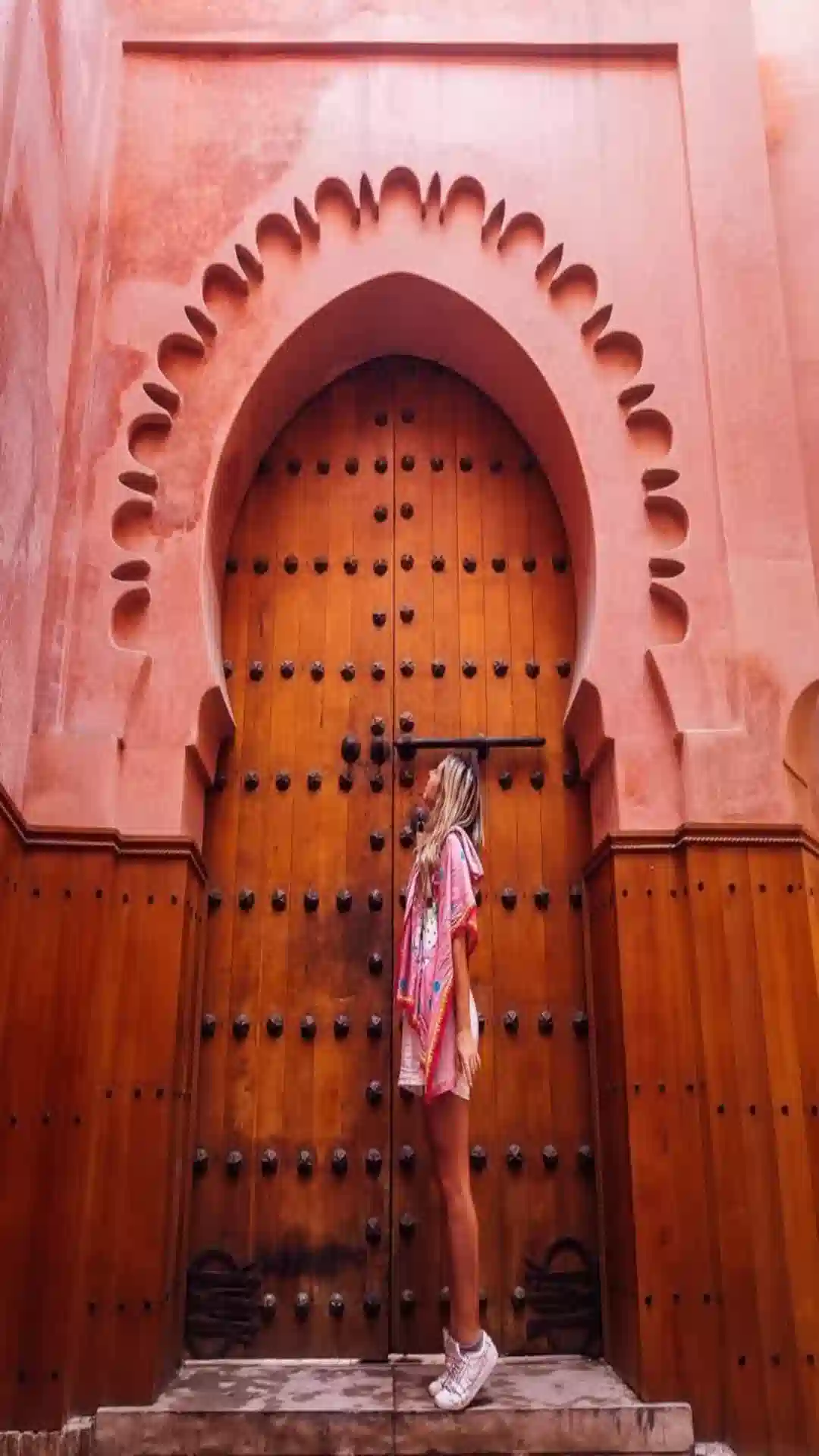
Guide tip from Hassan, our Marrakech-based driver-guide: “Most of Marrakech’s real beauty is hidden behind plain medina doorways, inside riad courtyards you’d never notice from the street. Don’t judge the city by its alleys alone — ask to see a riad courtyard, even one you’re not staying in, if a guide offers.”
Why Casablanca’s Beauty Is Different, Not Absent
Casablanca has almost no old medina to speak of — it grew from a small fishing town into Morocco’s largest city almost entirely during the 20th century, and that history is exactly what makes its beauty distinct rather than absent. Comparing it to Marrakech on Marrakech’s terms (ancient walls, dense souks, palace courtyards) will always make Casablanca look like it’s losing, in the same way judging Marrakech on Casablanca’s terms (skyline, urban planning, coastal views) would make Marrakech look unimpressive. Neither comparison is fair to either city.
Hassan II Mosque: One of the World’s Most Dramatic Religious Buildings
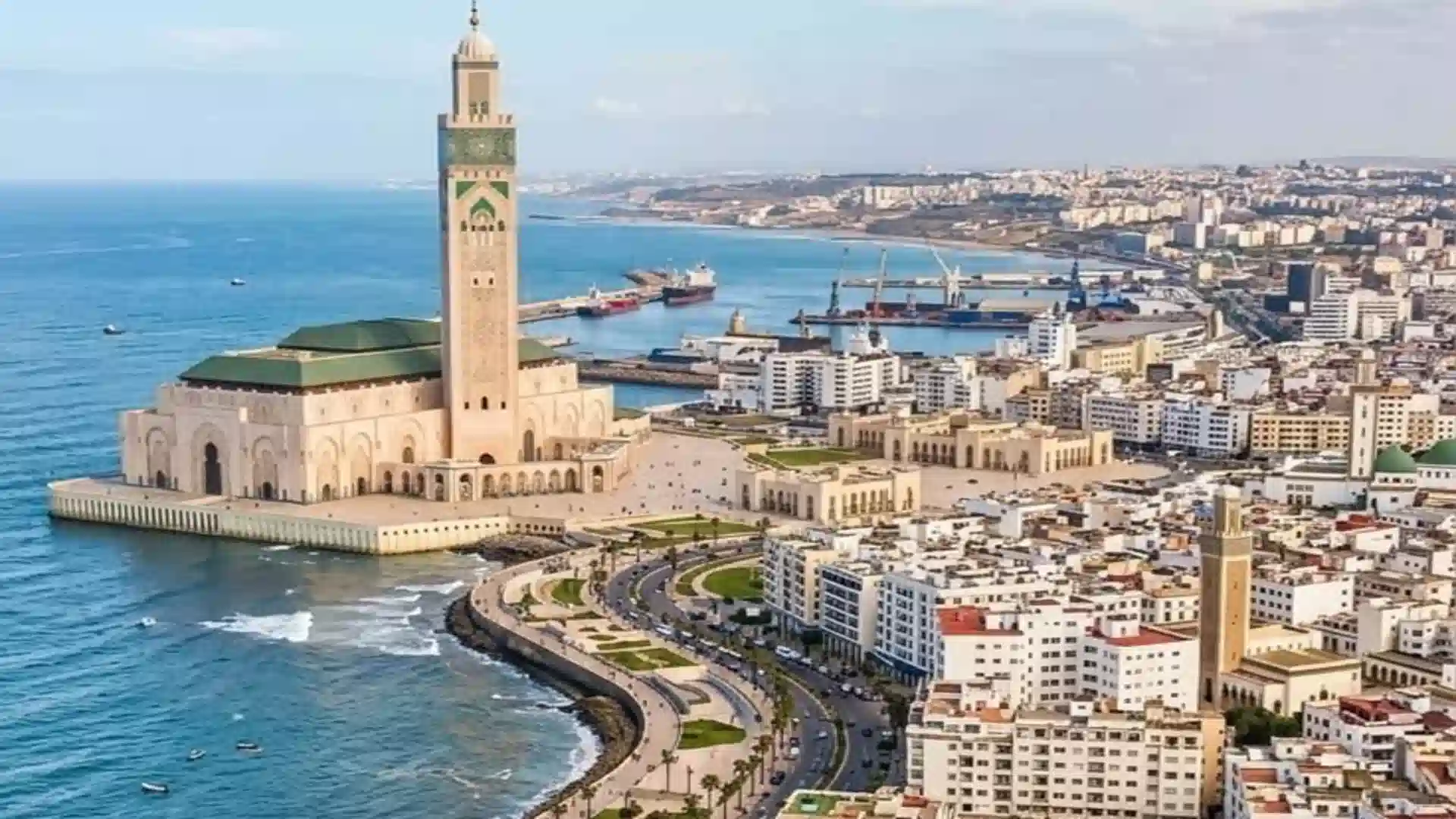
The Hassan II Mosque, completed in 1993 after seven years of construction, is built partly over the Atlantic Ocean, with a 210-meter minaret that was the world’s tallest religious structure at completion and remains the second-tallest minaret on Earth today. Designed by French architect Michel Pinseau, it holds up to 105,000 worshippers (25,000 inside, 80,000 on the surrounding esplanade) and features a retractable roof that opens in five minutes, letting the congregation pray under open sky. Few buildings anywhere combine that scale of engineering with that much traditional Moroccan craftsmanship — hand-carved cedar, intricate zellige tilework, and carved stucco cover nearly every interior surface.
Casablanca’s Art Deco Architecture
Beyond the mosque, Casablanca holds one of the largest concentrations of Art Deco architecture anywhere in the world, a legacy of the French Protectorate era (1912–1956) when the city became what colonial planners called a “laboratory of urbanism.” UNESCO’s own tentative-list submission for Casablanca describes the city as an exceptional testing ground where Maghrebi, European, and American influences merged into a distinct architectural style — geometric Art Deco facades layered with traditional Moroccan motifs — alongside Art Nouveau, Neo-Mauresque, Streamline Moderne, and later brutalist buildings. UNESCO’s own description compares Casablanca’s architectural significance to 20th-century planned cities like Brasília and Chandigarh, a comparison Marrakech, for all its historic beauty, simply isn’t in the running for.

Guide tip from Ibrahim, our operations lead: “Visitors who only see Casablanca’s airport or port area miss it entirely. Walk the streets around the old Central Market and Boulevard Mohammed V — that’s where the Art Deco facades are, and almost nobody points tourists there.”
The Corniche and Casablanca’s Coastal Character
Marrakech is landlocked; Casablanca sits directly on the Atlantic, and its Ain Diab Corniche waterfront gives the city a completely different visual and physical rhythm — palm-lined promenades, beach clubs, and open ocean views that no Imperial City inland can offer. It’s a different kind of beauty: less ornamental, more expansive.
That coastal setting also changes the light. Marrakech’s beauty depends heavily on warm, dry, inland light bouncing off red-ochre walls — the reason photographers chase golden hour there so specifically. Casablanca’s beauty works with a softer, more diffuse Atlantic coastal light, which suits the Hassan II Mosque’s white stonework and the Corniche’s open horizons in a way that wouldn’t translate to Marrakech’s tighter, warmer medina streets. Neither lighting condition is objectively better for photography; they simply favor different kinds of shots.
A Brief History: Why These Two Cities Look So Different
The visual gap between Marrakech and Casablanca isn’t an accident of taste — it’s a direct consequence of two very different histories.
Marrakech: Nearly a Millennium of Dynastic Building
Marrakech was founded around 1070 by the Almoravid dynasty and went on to serve, at various points, as the capital of the Almoravid, Almohad, and Saadian empires. Each successive dynasty added its own monuments — mosques, palaces, gardens, and fortified gates — largely within or around the same walled core, using the same regionally available red clay and sandstone. Nearly a thousand years of continuous construction inside one set of walls is what produces the density and coherence you feel walking through the medina today: it wasn’t planned as a unified aesthetic, but centuries of shared materials and building traditions made it look that way.
Casablanca: A 20th-Century City Built Almost from Scratch
Casablanca’s story is almost the inverse. Before the early 1900s, it was a modest port town called Anfa with a small population and no particular architectural distinction. Everything changed under the French Protectorate (1912–1956), when colonial administrators chose Casablanca, rather than the older imperial cities, as the site for a deliberately modern port and administrative capital. French architects and planners used it as a blank canvas, importing Art Nouveau and then Art Deco styles from Europe and blending them with Moroccan motifs and craftsmanship — producing, within roughly three decades, most of the architecture that still defines the city center today. That compressed, top-down building boom is exactly why Casablanca’s beauty reads as “modern” rather than “historic”: it mostly is.
Understanding that history changes how the comparison feels. Marrakech isn’t more beautiful because Casablanca’s builders failed at something — the two cities were built by different people, at different times, for entirely different purposes, roughly 800 years apart. It’s closer to comparing a cathedral to a well-designed corporate headquarters: both can be beautiful, but judging them by identical criteria misses what each was actually trying to achieve.
Food, Atmosphere, and Everyday Life: Beauty Beyond Architecture
Buildings aren’t the whole story — how a city feels to walk through matters just as much to most travelers’ sense of a place being “beautiful.”
Marrakech’s Sensory Atmosphere
Marrakech’s beauty is loud and layered: the smell of grilled meat and mint tea drifting through the souks, the visual chaos of spice pyramids and leather goods stacked in narrow alleys, the call to prayer echoing off the Koutoubia’s minaret at dusk. It’s a city that engages every sense at once, which is precisely why some travelers find it magical and others find it exhausting within the same afternoon.
Casablanca’s Everyday Rhythm
Casablanca feels entirely different at street level — wide French-planned boulevards, sidewalk cafés serving strong coffee and croissants alongside mint tea, a genuine business-city energy during the day that shifts toward the Corniche’s beach clubs and seafood restaurants by evening. It doesn’t have Marrakech’s medina intensity, but it offers something Marrakech can’t: a glimpse of how contemporary, cosmopolitan Moroccans actually live and work, rather than a historic district preserved largely for visitors. Travelers who’ve found Marrakech’s souks overwhelming often describe Casablanca’s pace as a welcome contrast rather than a letdown.
Common Misconceptions About Casablanca’s Beauty
Casablanca’s reputation problem comes down to a few repeated myths that don’t hold up once you’ve actually spent time there.
- “Casablanca is just an industrial port city.” Casablanca is Morocco’s economic engine, generating a large share of the country’s industrial output — but its downtown core, corniche, and mosque complex are entirely separate from its port and industrial zones, which most visitors never see or need to.
- “There’s nothing historic there.” True in the medieval sense, but Casablanca’s 20th-century architecture is itself historically significant enough that UNESCO has it under consideration for World Heritage status — “no old buildings” and “no historic value” aren’t the same claim.
- “It looks like every other big city.” The specific fusion of Art Deco geometry with zellige tilework and Moroccan ornamentation, at the scale Casablanca has it, doesn’t exist in quite the same combination anywhere else in the world.
- “The movie ‘Casablanca’ was filmed there, so that’s what it looks like.” The 1942 film was shot entirely on a Hollywood studio lot; Rick’s Café in the real city is a modern recreation built in 2004, not a historic site.
- “You need days to appreciate it, like Marrakech.” The opposite is closer to true: Casablanca’s key sights are compact and can be seen properly in a single well-planned day, which makes the “no time for Casablanca” excuse weaker than it sounds.
Marrakech vs. Casablanca: Head-to-Head by Category
| Category | Marrakech | Casablanca | Winner |
|---|---|---|---|
| Historic architecture | 900-year-old UNESCO medina | Minimal historic core | Marrakech |
| Modern/20th-century architecture | Limited | World-class Art Deco & modernist collection | Casablanca |
| Single “wow” landmark | Koutoubia Mosque & Jemaa el-Fna | Hassan II Mosque | Tie |
| Color & visual coherence | Uniform red-ochre palette | Architecturally varied, less uniform | Marrakech |
| Coastal scenery | None (landlocked) | Atlantic corniche & beaches | Casablanca |
| Gardens | Jardin Majorelle, Menara Gardens | Arab League Park | Marrakech |
| Photogenic street life | Souks, snake charmers, lantern-lit squares | Modern boulevards, business energy | Marrakech |
| Crowds & tourist pressure | Heavy, especially medina & main square | Light — most visitors pass through, not stay | Casablanca |
| Cost of a nice hotel | Higher (riad premium) | Generally lower for comparable quality | Casablanca |
Marrakech wins more categories outright, which is exactly why it dominates Morocco’s image abroad — but “more categories won” and “the only beautiful city” aren’t the same thing, and Casablanca’s wins (coastal scenery, architectural range, lower crowds) aren’t small ones.
Two rows in that table are worth unpacking, because they change how each city actually feels to visit rather than just how it looks in photos. Crowds matter more than most first-time planners expect: Marrakech’s medina and Jemaa el-Fna square can feel genuinely overwhelming during peak season (March–May and September–November), with persistent vendor attention and dense foot traffic that some travelers find part of the charm and others find draining within an hour. Casablanca has essentially none of that pressure — you can stand in front of the Hassan II Mosque or walk the Art Deco quarter without being approached every few steps, which is its own kind of appeal for travelers who’ve already had a dose of medina intensity elsewhere. Cost tells a similar story: a well-located riad in Marrakech’s medina during high season regularly costs more per night than an equivalent or better hotel room in Casablanca, simply because Marrakech’s tourism demand is so much higher relative to its supply of historic properties.
Is Casablanca Worth Visiting for Its Beauty Alone?
Yes, but with realistic expectations: Casablanca rewards visitors who come specifically for the Hassan II Mosque and its Art Deco architecture, not those expecting a medina experience like Marrakech’s or Fes’s.
Most American and European travelers arrive in Casablanca purely because its airport, Mohammed V International, is Morocco’s main international gateway — then leave within hours for Marrakech or Fes without spending a single night. That’s a reasonable choice if time is tight, but it means most visitors never see the two things that actually make Casablanca beautiful: the mosque, which requires a guided interior tour (it’s one of the only mosques in Morocco non-Muslims may enter), and the downtown Art Deco quarter, which requires deliberately walking rather than passing through. Budget a half-day minimum, ideally a full day, if beauty rather than pure logistics is the goal.
Best Photography Spots in Each City
Marrakech
- Jemaa el-Fna at golden hour — the square transitions from market to spectacle as the light drops.
- Jardin Majorelle — the cobalt-blue villa against green cactus gardens is one of the most photographed spots in Morocco.
- Bahia Palace courtyards — carved cedar ceilings and zellige tile framed by natural courtyard light at midday.
- Rooftop terraces near the Koutoubia — sunset views over the medina rooftops toward the minaret.
Casablanca
- Hassan II Mosque exterior at sunset — the minaret against the Atlantic light is the single best photo in the city.
- Boulevard Mohammed V — the dense concentration of restored Art Deco facades downtown.
- The Corniche at Ain Diab — ocean views, especially early morning before the beach clubs fill up.
- Habous Quarter (New Medina) — a planned 1930s neo-Moorish district built by French colonial architects, worth seeing precisely because it’s a deliberate architectural experiment rather than an organic old town.

Which City Should You Visit First (or Both)?
For most travelers, this shouldn’t actually be an either-or decision — the real question is how to allocate your limited days between the two, not which one to skip entirely.
- First-time visitors with under a week: Prioritize Marrakech. It delivers the concentrated, classic Morocco experience most people are looking for on a first trip, and it’s also the more practical base for a Sahara Desert extension.
- Architecture and design enthusiasts: Make time for Casablanca specifically, even if it means a shorter Marrakech stay. The Art Deco quarter and Hassan II Mosque reward visitors who wouldn’t otherwise think to look for beauty there.
- Travelers with 10+ days: See both. A common, well-tested route starts in Casablanca (arriving internationally), spends a day there, then continues to Marrakech, the Sahara, and Fes before flying home from either Marrakech or Casablanca.
- Short layover travelers: If you have only a few hours between flights in Casablanca, the Hassan II Mosque alone is worth the detour; skip trying to see the Art Deco quarter properly in a rush.
- Honeymooners and couples: Marrakech’s riad culture — private courtyards, rooftop dinners, spa hammams — is built for romance in a way Casablanca’s business-city character isn’t; save Casablanca for a shared day trip rather than your base.
- Families with kids: Casablanca’s wide boulevards, beach clubs along the Corniche, and lower crowd pressure can actually be easier with young children than Marrakech’s dense, traffic-heavy medina alleys, even though Marrakech has more to see.
- Repeat visitors to Morocco: If you’ve already done Marrakech, Fes, and the desert on a previous trip, Casablanca is one of the more rewarding “second visit” additions precisely because so few returning travelers bother with it.
What Travel Writers and Reviews Tend to Say
Guidebooks and travel publications overwhelmingly frame Marrakech as Morocco’s essential, must-see city and Casablanca as an optional add-on — a pattern that shapes expectations before travelers even arrive.
That framing isn’t baseless: Marrakech genuinely offers more sightseeing density per day, and most travel guides are written to maximize a limited trip length, which naturally favors recommending the city with more concentrated, walkable landmarks. But it does mean Casablanca’s beauty gets undersold by omission rather than by direct comparison — few guidebooks actually put the two cities’ architecture side by side the way this guide does. Online traveler reviews tell a slightly different story: visitors who specifically sought out the Hassan II Mosque or booked a guided Art Deco walking tour in Casablanca consistently rate those specific experiences as highlights of their trip, even when their overall city ranking still favors Marrakech. The pattern suggests Casablanca’s problem isn’t that its beauty disappoints people who look for it — it’s that most people never look. If you’re planning your own trip and weighing guidebook advice against a more balanced view, treat this discrepancy as useful information: the gap between “recommended” and “actually appreciated once visited” is a strong signal that Casablanca is underrated relative to its real merits, not that reviewers are wrong to prefer Marrakech overall.
How to See Both Cities: Practical Logistics
Marrakech and Casablanca are roughly 240 kilometers apart, connected by Morocco’s fastest and most reliable train line — a genuinely easy add-on rather than a detour.
| Travel Method | Duration | Notes |
|---|---|---|
| ONCF train (Al Boraq/standard rail) | ~2.5–3 hours | Most comfortable and scenic option; multiple daily departures |
| Private driver | ~3 hours | Flexible timing, door-to-door, good for groups or families |
| Domestic flight | ~1 hour flight (plus airport time) | Rarely worth it given the short train time |
Because the train ride is short and comfortable, there’s little reason to skip one city entirely if your itinerary allows even one extra day. A one-night Casablanca stopover added to a Marrakech-and-desert itinerary is one of the easiest upgrades to an otherwise standard Morocco trip. If you’re building a longer circuit that already starts or ends in Casablanca, see our Morocco Tours from USA guide for how American travelers typically route their flights through it.
Sample 2-Day Casablanca-to-Marrakech Add-On
If you’re already flying into Casablanca and want to see both cities’ beauty without overcomplicating your itinerary, this compact structure works well as a bolt-on to a longer Marrakech or desert trip:
- Day 1 – Arrival in Casablanca. Land at Mohammed V International, check in, then head straight to the Hassan II Mosque for a guided interior tour (available in English several times daily except Fridays). Spend the afternoon walking Boulevard Mohammed V and the Art Deco quarter around the old Central Market, then watch sunset from the Corniche.
- Day 2 – Train to Marrakech. Take a morning train from Casa Voyageurs station (roughly 2.5–3 hours) and arrive in Marrakech by early afternoon, leaving time to settle into your riad and catch Jemaa el-Fna as it transitions into its evening atmosphere.
This structure adds only one extra night to a standard Marrakech-based trip while giving Casablanca’s beauty a genuinely fair chance to make its case, rather than reducing the city to a rushed airport transfer.
Frequently Asked Questions
Is Marrakech or Casablanca more beautiful?
Marrakech is generally considered more beautiful for its historic, UNESCO-listed medina and uniform red-ochre architecture, while Casablanca offers a different, equally legitimate kind of beauty through its Art Deco architecture, modernist heritage, and the Hassan II Mosque.
Why is Marrakech called the Red City?
Marrakech’s nickname comes from the reddish clay-and-chalk ramparts built in 1122–1123 and the red sandstone used in later buildings throughout the medina, giving the old city a consistent warm color palette.
Is Casablanca worth visiting, or should I skip straight to Marrakech?
Casablanca is worth at least a half-day to full-day visit for the Hassan II Mosque and its Art Deco downtown, even though most travelers prioritize Marrakech for a longer stay.
How far is Casablanca from Marrakech?
Casablanca and Marrakech are about 240 kilometers apart, roughly a 2.5-to-3-hour train ride or drive, making it easy to visit both cities on the same trip.
What is the most beautiful building in Casablanca?
The Hassan II Mosque is Casablanca’s most beautiful and significant building, notable for its 210-meter minaret, oceanfront location, and retractable roof, alongside the city’s broader collection of Art Deco facades downtown.
Which city is better for a short 2-3 day Morocco trip?
Marrakech is the better choice for a short 2-to-3-day trip, since it concentrates more historic sights, gardens, and atmosphere within easy walking distance, while Casablanca rewards a slower, more deliberate visit better suited to longer itineraries.
The Verdict: Is Marrakech or Casablanca More Beautiful?
If forced to choose one word, most visitors and most travel writers would still say Marrakech is Morocco’s more beautiful city, and the numbers back that instinct: a 900-year-old UNESCO World Heritage medina simply has more built-in visual density than a city that only found its architectural identity in the last hundred years. But “is Marrakech or Casablanca more beautiful” is really two different questions wearing one sentence — traditional beauty versus modern beauty, ornament versus scale, an old world versus a designed one. Casablanca will never out-picture Marrakech’s medina, and it isn’t trying to. What it offers instead — the Hassan II Mosque’s engineering, a genuinely world-class Art Deco streetscape, and an Atlantic coastline Marrakech will never have — is worth seeing on its own terms, not as an afterthought before the “real” trip begins. Give both cities a fair chance on your own itinerary, and you’ll likely come away agreeing with most of our clients: Marrakech remains the heart of a Morocco trip, but Casablanca deserves far more than the half-day layover it usually gets.
Related Guides
- What Is Marrakech Morocco? Location, History & What to See
- 20 Best Things to Do in Casablanca
- Morocco’s Imperial Cities: The Complete Guide
- What Is the Prettiest City in Morocco? A Local’s Honest Guide
- Is Marrakech Worth Visiting? An Honest Guide
Sources referenced: UNESCO World Heritage Centre — Medina of Marrakesh, UNESCO Tentative List — Casablanca, 20th-Century City, and Hassan II Mosque reference data. Population figures reflect 2024 estimates. For the most current visitor information, always confirm details directly with these official sources as you weigh the question for yourself: is Marrakech or Casablanca more beautiful for the trip you’re actually planning?