What Is the Biggest Oasis in Morocco? Tafilalt Explained
Table of Contents
What Is the Biggest Oasis in Morocco? Tafilalt Explained

Quick answer: The biggest oasis in Morocco is Tafilalt (also spelled Tafilalet), a vast palm-grove oasis along the Ziz River in the Errachidia Province, near the towns of Erfoud and Rissani. Its core wetland and palm-grove system covers roughly 15,300 hectares, and it is widely cited as one of the largest oases in the world. It’s often confused with the Draa Valley, which is Morocco’s longest oasis but not its largest by area.
If you’ve searched for the biggest oasis in Morocco, you’ve probably landed on two different answers: Tafilalt and the Draa Valley. Both are real, and both are correct — they’re just answering slightly different questions. Tafilalt, spread across the lower Ziz Valley near Erfoud and Rissani, is the biggest oasis in Morocco by area and population, and it’s the one most geographers and the Moroccan tourism board point to when asked which oasis is largest. This guide covers exactly what Tafilalt is, how it earned that title, how it compares to the Draa Valley and Morocco’s other major oases, and how to actually visit it — including the history that makes it far more than just a scenic stop on the way to the dunes.
It’s worth saying upfront why this distinction is more than trivia. Morocco’s oases sit at the crossroads of geography, history, and modern tourism: the same water systems that let a medieval trading empire flourish in the middle of the desert are the ones still irrigating the palm groves travelers walk through today, and understanding which oasis is genuinely the largest — and why — makes a visit to southeastern Morocco considerably more meaningful than simply checking “desert” off a list.
What Exactly Is an Oasis? A Quick Definition
An oasis is a fertile, vegetated area within a desert or semi-arid region, sustained by a permanent water source — typically a spring, a river, or accessible groundwater — that allows plants, farming, and human settlement to exist where the surrounding land cannot support them. In Morocco specifically, oases are almost always built around a river descending from the Atlas Mountains: as that river reaches the flatter, drier land near the Sahara, communities have spent centuries channeling its water into date-palm groves and farmland, creating the string of green valleys — Tafilalt, the Draa Valley, Skoura, Todra — that run along Morocco’s southern desert fringe. Understanding this basic mechanism is useful context for the rest of this guide, since it explains why the biggest oasis in Morocco happens to sit exactly where it does: at the point where a substantial river, the Ziz, spreads widest before the desert takes over.
At a Glance: Morocco’s Major Oases Compared
| Oasis | Claim to Fame | Location | Nearest Towns |
|---|---|---|---|
| Tafilalt (Tafilalet) | Biggest oasis in Morocco by area | Ziz Valley, Errachidia Province | Erfoud, Rissani |
| Draa Valley | Longest oasis in Morocco | Draa River Valley, south of the Anti-Atlas | Agdz, Zagora |
| Skoura Oasis | Best-preserved kasbahs and fortified villages | Near the Dades Valley | Skoura, Ouarzazate |
| Marrakech Palmeraie | Oldest and most famous urban oasis | Just north of Marrakech city | Marrakech |
| Tinghir/Todra Oasis | Dramatic gorge-side palm grove | Todra Valley | Tinghir |
What Is the Biggest Oasis in Morocco? Meet Tafilalt
Tafilalt is a chain of interconnected palm groves and irrigated farmland that follows the Ziz River (locally called Wadi Ziz) as it flows south out of the High Atlas and toward the Sahara, before disappearing into the sand near the Algerian border. Rather than a single, contained garden, it’s best understood as a whole agricultural region: a network of villages, date-palm groves, and irrigation channels (called khettaras and seguias) spread across the valley floor around the towns of Erfoud and Rissani, in Morocco’s Drâa-Tafilalet administrative region.
The core of the Tafilalt oasis — the wetland and palm-grove complex recognized under the international Ramsar Convention on Wetlands — covers approximately 15,300 hectares (about 38,000 acres, or roughly 60 square miles). That figure, from the official Ramsar Sites Information Service listing for the “Oasis du Tafilalet” (designated in January 2005), is the most precise, citable measurement of the oasis itself. You’ll sometimes see much larger figures — up to 77,000 square kilometers — attached to “Tafilalet,” but that number describes the broader Tafilalet geographic and administrative region, not the palm-grove oasis proper, and it’s worth keeping the two straight when comparing sources.
Geographically, Tafilalt sits at the point where the Ziz River, having tumbled down out of the High Atlas through the dramatic Ziz Gorges near Errachidia, finally slows down and spreads across a wide, flat valley floor before petering out into the sand of the Sahara. That transition — from a fast mountain river to a slow, spreading one — is exactly what allows an oasis this large to exist: the water fans out across a broad, shallow basin rather than staying confined to a narrow channel, feeding a much wider strip of cultivable land than a river running through a tight canyon ever could.
How an Oasis This Large Actually Works
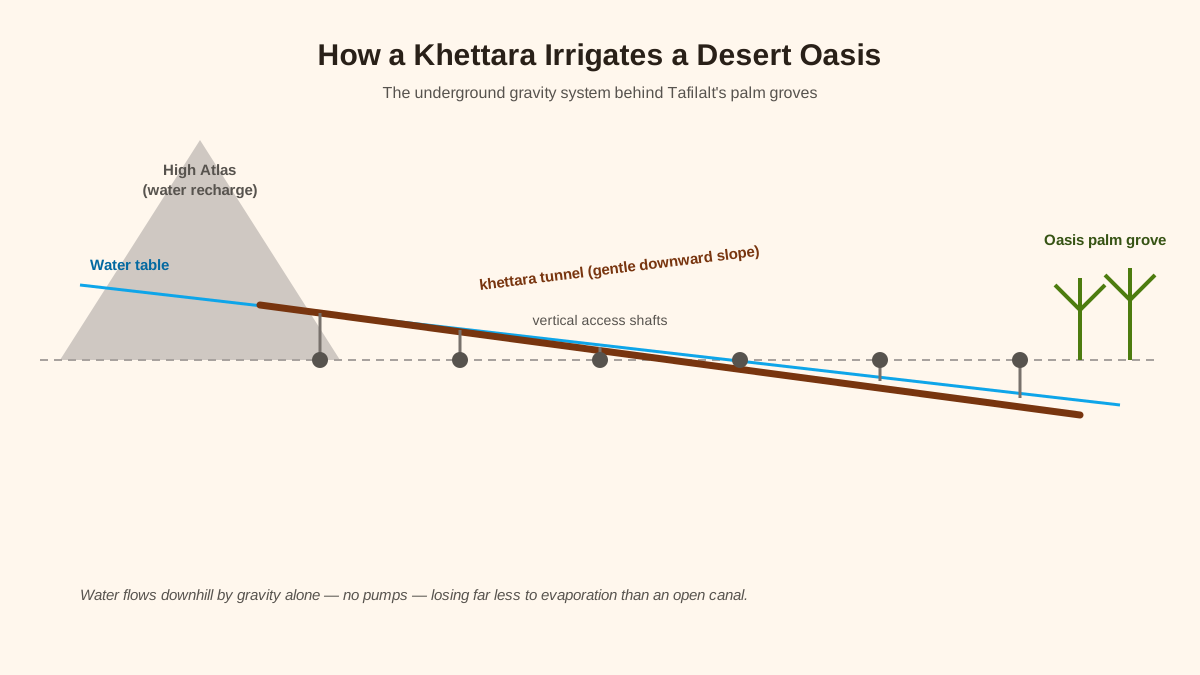
An oasis of Tafilalt’s scale isn’t sustained by surface water alone. For centuries, farmers here have relied on a network of khettaras — underground gravity-fed tunnels, some running for several kilometers, that tap into the water table upslope and carry it by gentle gradient to the palm groves below, losing far less water to evaporation than an open canal would in desert heat. Alongside the khettaras, a system of seguias (surface irrigation channels) and a customary water-sharing schedule, historically managed by community elders, distributes water fairly among plots during the dry season. This combination of underground engineering and social organization is, in a real sense, the actual mechanism behind Tafilalt’s size: without it, the Ziz Valley would be as barren as the desert surrounding it.
Why Tafilalt Is Considered Morocco’s (and One of the World’s) Largest Oasis
Tafilalt earns the title of largest oasis in Morocco through a combination of three things: the sheer continuous area of cultivated palm grove along the Ziz Valley, the density of the historic irrigation network that has sustained it for over a thousand years, and the population it has supported — at its medieval peak, Tafilalt’s central city was one of the wealthiest trading centers in North Africa. Morocco’s National Tourist Office (ONMT) itself describes Tafilalt as home to the largest oasis in the world, a claim that puts it in the same conversation as famous oasis systems in Algeria, Libya, and the Arabian Peninsula.
The History of Tafilalt: From Sijilmasa to the Alaouite Dynasty
Tafilalt’s size is only half the story — its history is what makes it genuinely significant, not just large. Long before it was a tourist destination, Tafilalt was one of the most important commercial hubs in the medieval Islamic world.
Sijilmasa: Gateway of the Trans-Saharan Gold Trade
In the 8th century, the Midrarid dynasty founded the city of Sijilmasa within the Tafilalt oasis. For roughly 600 years, Sijilmasa functioned as the northern terminus of the trans-Saharan caravan routes, the trading network that carried gold, salt, and enslaved people between West Africa and the Mediterranean world. Caravans leaving Sijilmasa could take ten days or more to cross the High Atlas to reach Fez and Meknes, which tells you how remote — and how strategically valuable — this oasis was as a desert trading post. At its height, Sijilmasa minted its own gold currency and was described by medieval geographers as one of the richest cities in the Maghreb. Some estimates place the city’s population at its 11th- and 12th-century peak in the tens of thousands — extraordinary for an isolated desert settlement, and only possible because Tafilalt’s agricultural output was large enough to feed a major urban population in the middle of the Sahara’s edge.
Sijilmasa’s fortunes were tied directly to the gold trade, and when that trade shifted to other routes and the city was progressively weakened by regional conflicts, drought cycles, and the silting of parts of its irrigation system, the once-great city declined into the smaller settlement that eventually became modern Rissani. Archaeological excavations at the Sijilmasa site, ongoing in recent years, continue to uncover minted coins, pottery, and architectural remains that confirm just how significant this corner of Tafilalt once was.
Birthplace of Morocco’s Ruling Dynasty
Tafilalt’s second major claim to historical fame is dynastic: it is the ancestral homeland of the Alaouite dynasty, the family that has ruled Morocco since the 17th century and still occupies the throne today. Moulay Ali Cherif, recognized as the dynasty’s founding figure, was based in the Tafilalt region before his descendants expanded Alaouite control north to Fez and Marrakech over the following decades. The Alaouites used Tafilalt as their political and military base during this consolidation, and the region’s importance to the ruling family is part of why Rissani — Tafilalt’s modern successor town to Sijilmasa — remains a place of pilgrimage and ceremonial significance in Morocco, home to the Moulay Ali Cherif Mausoleum, which honors the dynasty’s founder.
Biggest vs. Longest: Tafilalt vs. the Draa Valley Oasis
This is the single most common point of confusion in any search for the biggest oasis in Morocco, so it’s worth addressing directly: Tafilalt and the Draa Valley are not competing for the same title.
- Tafilalt is the biggest oasis in Morocco by area — its palm groves and irrigated farmland form a dense, wide cluster around Erfoud and Rissani.
- The Draa Valley is Morocco’s longest oasis — a narrow, ribbon-like strip of palm groves that follows the Draa River for roughly 200 kilometers (124 miles) from Ouarzazate down through Agdz and Zagora, part of a river system that stretches over 1,100 kilometers in total when you count its journey into the Sahara.
Think of the difference this way: Tafilalt is wide, the Draa Valley is long. Both are genuinely spectacular to drive through, and many Morocco itineraries visit one or the other (or, on longer trips, both) — but if the specific question is which oasis in Morocco is the biggest, the answer is Tafilalt, not the Draa Valley.
The Draa Valley’s palm groves, strung along the river between Ouarzazate and Zagora, pass through a string of historic ksour (fortified villages) and kasbahs, including the well-preserved Tamnougalt Kasbah near Agdz — a 16th-century mudbrick complex that once housed a local Jewish and Muslim merchant community together. Millions of date palms line the valley, and the local economy still depends heavily on alfalfa, henna, cereals, and dates grown in the narrow strip of fertile land the river supports. Where Tafilalt’s story is about medieval trade and dynastic history, the Draa Valley’s is about the sheer distance a single river oasis can stretch across an otherwise empty landscape.
| Metric | Tafilalt | Draa Valley |
|---|---|---|
| Superlative | Biggest oasis in Morocco (by area) | Longest oasis in Morocco |
| Approx. size | ~15,300 hectares (Ramsar core area) | ~200 km of palm groves along the valley |
| River | Ziz River (Wadi Ziz) | Draa River |
| Main towns | Erfoud, Rissani | Agdz, Zagora |
| Historic claim to fame | Sijilmasa trading city; Alaouite dynasty homeland | Historic caravan staging point for Timbuktu-bound trade |
How Tafilalt Compares to the World’s Other Great Oases
Morocco’s tourism board describes Tafilalt as home to the largest oasis in the world, a claim that places it alongside several other famously large oasis systems that come up in the same conversation:
| Oasis | Country | Known For |
|---|---|---|
| Tafilalt | Morocco | Largest oasis by area; Sijilmasa trading history |
| Al-Ahsa Oasis | Saudi Arabia | UNESCO World Heritage site; one of the largest oases globally by palm count |
| Siwa Oasis | Egypt | Isolated Berber-speaking community; ancient Oracle of Amun temple |
| Huacachina | Peru | Small lagoon oasis famous for sandboarding tourism |
Exact global rankings for “largest oasis in the world” vary depending on whether you measure by cultivated area, palm tree count, or total wetland designation, and different sources use different boundaries for what counts as a single oasis system. What’s consistent across sources, though, is that Tafilalt is always mentioned in this top tier — it’s not a borderline or locally-inflated claim, but one repeated by Morocco’s own tourism authority and independent travel and geography publications alike.
Other Major Oases in Morocco Worth Knowing
Tafilalt and the Draa Valley get most of the attention, but Morocco has dozens of smaller oasis systems, several of which are worth building into a longer itinerary.
Skoura Oasis
Located a short drive from Ouarzazate, Skoura is best known not for its size but for its density of historic kasbahs — the fortified mudbrick family compounds that once housed the region’s wealthiest landowning families. The Amerhidil Kasbah, partially restored and open to visitors, is one of the best-preserved examples in southern Morocco, and its towered silhouette against the palm canopy has made it one of the most photographed kasbahs in the country — it has appeared as a filming location in several international productions shot in the region.
Marrakech Palmeraie
The Palmeraie north of Marrakech is Morocco’s most famous urban oasis, planted — according to local tradition — over a thousand years ago. It’s far smaller than Tafilalt or the Draa Valley, but its proximity to Marrakech has made it one of the most visited palm groves in the country, now home to golf courses, resorts, and villas alongside its older palm groves.
Tinghir and the Todra Oasis
The palm grove that lines the approach to the dramatic Todra Gorge, near the town of Tinghir, is smaller in scale than Tafilalt but is often considered one of the most photogenic, thanks to the towering red rock walls that frame it on both sides.
For more on the desert road that connects several of these oasis regions, see our guide to the Dades Valley to Ziz Valley via Tinghir route.
Life and Agriculture in the Tafilalt Oasis Today
Tafilalt today is still a working agricultural landscape, not a museum piece, and understanding what actually happens inside the oasis makes a visit far more interesting.
Dates: Tafilalt’s Signature Crop
Tafilalt is one of Morocco’s most important date-growing regions, particularly known for Medjool dates, and the nearby town of Erfoud hosts an annual International Date Festival celebrating the harvest each October. Dates from Tafilalt have historically been a major economic resource for the region, traded alongside the same routes that once carried gold and salt.
An Internationally Recognized Wetland
Beyond agriculture, Tafilalt holds formal ecological status: the “Oasis du Tafilalet” was designated a Wetland of International Importance under the Ramsar Convention in January 2005. The site includes the reservoir behind the historic Hassan Ad-Dakhil dam, small rivers, irrigation channels, and marshes, and it functions as an important wintering ground for migratory birds, including the globally vulnerable Houbara bustard and the near-threatened marbled teal.
Water Challenges Facing the Oasis
Like most of Morocco’s desert oases, Tafilalt faces real environmental pressure. Dam operations upstream and increased irrigation demand have caused seasonal drying of parts of the river system, while prolonged drought and high evaporation rates have led to soil salinization in some areas — a genuine threat to both the ecosystem and the farming communities who depend on it. This context matters for travelers: the palm groves you’ll see today are the product of a centuries-old water management system that is currently under real strain, which is part of why sustainable, locally-guided tourism matters in this region.
Population and Daily Life
Tafilalt today supports a population spread across roughly twenty communes and dozens of ksour (fortified villages), making it one of the more densely populated pockets of southeastern Morocco despite sitting on the edge of the Sahara. Alongside date farming, residents grow alfalfa, barley, and vegetables in the shade of the palm canopy — a traditional layered farming technique, common across Saharan oases, where tall palms shelter fruit trees, which in turn shade lower-growing crops, all sharing the same irrigation water. Many of the ksour still standing today, built from rammed earth (pisé) in the same style as the kasbahs of the Draa and Dades valleys, remain inhabited rather than preserved purely as historic sites.
Visiting Responsibly: Why It Matters in a Water-Stressed Oasis
Because Tafilalt’s water system is already under real strain from drought and upstream dam management, how visitors behave here has a more direct impact than it might in a less fragile environment. A few simple practices go a long way: stick to established paths through the palm groves rather than cutting across cultivated plots, avoid wasting water at accommodations in Erfoud or Rissani (many riads in the region rely on the same limited groundwater as local farms), and choose local guides and homestays where possible, since tourism income that stays within the oasis communities directly supports the labor-intensive khettara and seguia maintenance that keeps the palm groves alive. None of this requires major sacrifice from travelers — it mostly means treating the oasis as the working agricultural landscape it is, not just scenery.
How to Visit the Biggest Oasis in Morocco
Tafilalt sits right on the classic Fes–Merzouga and Marrakech–Merzouga desert-tour routes, which makes it easy to fold into an existing Sahara itinerary rather than needing a special trip.
Getting There
Most travelers reach Tafilalt as a stop on the way to the Erg Chebbi dunes near Merzouga, since Erfoud and Rissani sit directly on that route, roughly a 30–45 minute drive short of Merzouga itself. If you’re coming from Fes (about 460 km / 7–8 hours by road, usually split across two days with an overnight near the Dades or Ziz valleys), the drive runs through the Middle Atlas cedar forests, the Ziz Gorges near Errachidia, and then the Ziz Valley itself — a scenic route that gives you a preview of the oasis landscape well before you reach Erfoud. From Marrakech (roughly 560 km / 8–9 hours, also typically split into two driving days), the route crosses the High Atlas via the Tizi n’Tichka pass and continues through Ouarzazate and the Dades Valley before reaching the Ziz Valley and Tafilalt from the west. There is no airport within Tafilalt itself; the closest is the small Errachidia Moulay Ali Cherif Airport, roughly an hour’s drive north, though most international travelers fly into Fes, Marrakech, or Casablanca and reach the oasis by road as part of a guided tour.
Climate: What to Expect
The Tafilalt region has a hot, arid desert climate typical of Morocco’s pre-Saharan zone. Summer daytime highs in Erfoud and Rissani regularly exceed 100°F (38°C) between June and August, occasionally pushing past 110°F (43°C) during heat waves, while winter days are mild — typically in the 60s°F (15–20°C) — but nighttime temperatures can drop close to freezing between December and February. Rainfall is minimal year-round, generally under 130mm (5 inches) annually, which is precisely why the oasis’s irrigation network, rather than rainfall, is what makes agriculture here possible at all.
What to Do in the Oasis
- Walk or bike through the palm groves around Erfoud or Rissani with a local guide, who can point out the traditional irrigation channels still in use today.
- Visit Rissani’s old town and market, built near the ruins of Sijilmasa, including the Ksar Abbar and the town’s famous Tuesday and Thursday souks.
- Explore the Sijilmasa archaeological site just outside Rissani, where ongoing excavations have uncovered remains of the medieval trading city.
- Visit a working date farm, especially if traveling in October during the date harvest and Erfoud’s International Date Festival.
- Continue on to Merzouga for the Erg Chebbi dunes, the natural extension of any Tafilalt visit and the highlight of most Sahara-bound itineraries.
Best Time to Visit
March–May and September–November offer the most comfortable conditions for exploring the oasis on foot, avoiding both the intense summer heat (regularly above 100°F/38°C) and the cold desert nights of deep winter. October is a particularly good window if you want to catch Erfoud’s date harvest festival alongside comfortable daytime temperatures.
Sample Stop: Adding Tafilalt to a Sahara Desert Tour
Because Tafilalt sits directly on the standard desert-tour corridor, most itineraries can absorb a stop here without adding an extra day. A typical addition looks like this:
- Morning: Depart Dades Gorge or the Ziz Gorges, driving south along the Ziz Valley, watching the landscape widen into the Tafilalt palm groves.
- Midday: Stop in Erfoud for lunch and, if timed right, a visit to a local fossil workshop (Erfoud sits on some of Morocco’s richest trilobite and ammonite fossil beds).
- Early afternoon: Continue to Rissani for the Sijilmasa ruins, the Ksar Abbar, and — on souk days — the town’s lively market.
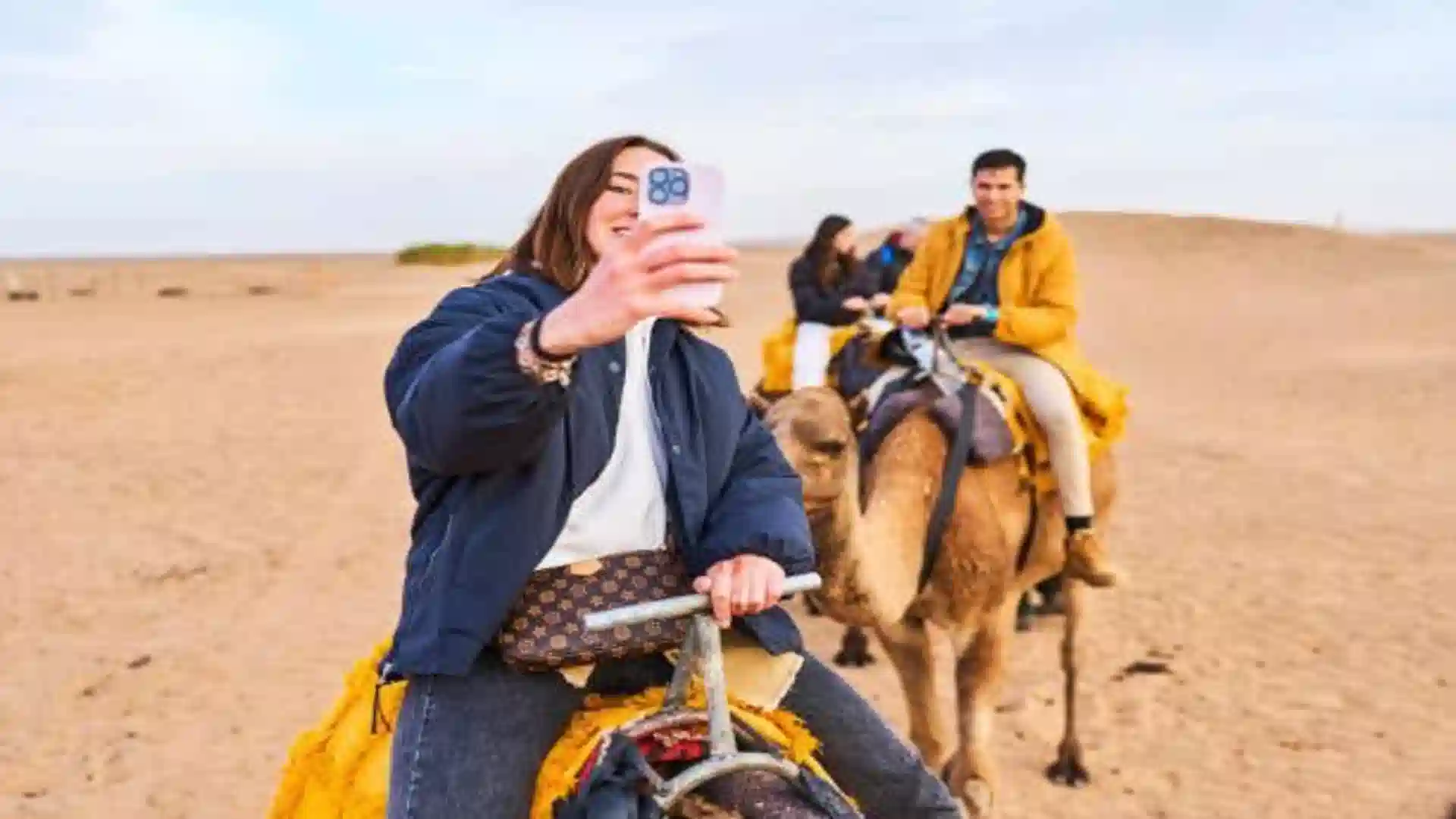
- Late afternoon: Drive the final 30–45 minutes to Merzouga, arriving in time for a camel trek into the Erg Chebbi dunes before sunset.
Frequently Asked Questions
What is the biggest oasis in Morocco?
The biggest oasis in Morocco is Tafilalt (Tafilalet), a palm-grove oasis along the Ziz River near Erfoud and Rissani, with a core wetland and palm-grove area of about 15,300 hectares. It has held this status for centuries, dating back to its role as the fertile hinterland supporting the medieval trading city of Sijilmasa.
Is Tafilalt the largest oasis in the world?
Tafilalt is widely described by Morocco’s National Tourist Office and multiple travel sources as one of the largest oases in the world, though exact global rankings vary depending on how “oasis” is measured — by cultivated area, palm count, or wetland boundary. Regardless of its precise global rank, it is consistently placed in the same tier as other famous large oases such as Al-Ahsa in Saudi Arabia.
What is the difference between Tafilalt and the Draa Valley oasis?
Tafilalt is Morocco’s biggest oasis by area, while the Draa Valley is Morocco’s longest oasis, stretching roughly 200 kilometers along the Draa River — they are different superlatives, not competing claims to the same title. Both are worth visiting, and some longer Morocco itineraries include stops in each.
What towns are closest to the Tafilalt oasis?
Erfoud and Rissani are the two main towns within the Tafilalt oasis, both located a short drive from the Erg Chebbi dunes near Merzouga. Rissani in particular sits adjacent to the ruins of Sijilmasa, the medieval city that once anchored the entire oasis economy.
Can you visit Tafilalt on a Morocco desert tour?
Yes — Tafilalt sits directly on the standard Fes–Merzouga and Marrakech–Merzouga desert tour routes, so most multi-day Sahara tours pass through or stop in Erfoud and Rissani on the way to the dunes. Adding time for the Sijilmasa ruins or a local date farm typically requires only a short detour rather than an extra day.
Plan Your Visit to Morocco’s Biggest Oasis
Seeing the biggest oasis in Morocco in person — its palm groves, the Sijilmasa ruins, and the market towns of Erfoud and Rissani — is easy to combine with a Sahara Desert tour, since Tafilalt sits directly on the route to the Erg Chebbi dunes. Our Merzouga-based team can build a Ziz Valley and Tafilalt stop into any desert itinerary, from a quick 3-day loop to a longer grand tour, with a local guide on hand to walk you through the palm groves, the Sijilmasa ruins, and the working irrigation channels that have kept this oasis alive for over a thousand years.
Browse Our Sahara Desert Tours →
Related Guides
- Merzouga Morocco: The Complete 2026 Desert Guide
- Dades Valley to Ziz Valley via Tinghir
- 25 Essential Sahara Desert Facts
- Erfoud Fossils Ultimate Guide
- Merzouga vs Zagora: Which Sahara Desert Tour Wins?
Sources referenced: Ramsar Sites Information Service (Oasis du Tafilalet, Site No. 1483), Encyclopaedia Britannica (Tafilalt), and the Moroccan National Tourist Office. For the most current figures, always confirm directly with these official sources — but by every measure they report, Tafilalt remains the biggest oasis in Morocco.